
Reducing Face Bloat and Puffiness: Every Method Ranked
Facial puffiness is one of the most common appearance concerns we hear about from our reader community, and one of the most misunderstood. The swollen, undefined look that many men notice particularly in the morning or after a heavy night is not a fixed feature of their face. It is a physiological state that responds directly and often rapidly to the right interventions.
The mechanisms behind facial bloat are well documented. Excess sodium causes the body to retain water in the interstitial tissue, which accumulates visibly in the face due to gravity and the relative looseness of facial skin compared to other areas. Alcohol disrupts the body’s antidiuretic hormone regulation and produces significant water retention. Sleep position, poor lymphatic flow, and chronic inflammation all contribute independently. The face is essentially a visible readout of your body’s hydration and inflammatory status at any given moment, and the good news is that most of these variables are highly controllable.
We have tested every major debloating method across our team over an extended period. The results were more consistent and faster than most readers expect. This guide ranks every major approach by evidence quality and real-world effect size.
Every Method Ranked
| Method | Rating | Effect Size | Timeline |
|---|---|---|---|
| Sodium reduction | ★★★★★ | Very high | 24 to 48 hours |
| Hydration optimisation | ★★★★★ | High | 24 to 72 hours |
| Potassium intake | ★★★★☆ | High | 2 to 5 days |
| Sleep position | ★★★★☆ | Moderate to high | Immediate |
| Lymphatic drainage massage | ★★★☆☆ | Moderate | Immediate + cumulative |
| Gua sha | ★★★☆☆ | Moderate | Immediate + cumulative |
| Alcohol reduction | ★★★★★ | Very high | 48 to 72 hours |
| Cold therapy | ★★★☆☆ | Moderate | Immediate |
| Anti-inflammatory diet | ★★★★☆ | High | 1 to 2 weeks |
Tier 1: Highest Impact
Sodium Reduction
Sodium is the single most impactful variable in facial puffiness for most men, and the one we address first with any reader raising this concern. The relationship is direct and physiological. Sodium causes the body to retain water to maintain osmotic balance, and this retained fluid accumulates visibly in the face within hours of high sodium consumption.
The average Western diet contains 3,400 to 4,000mg of sodium daily, well above the 2,300mg recommended threshold. In our experience, the men who notice the most dramatic puffiness tend to be those whose diets are heavily weighted toward processed foods, restaurant meals, and fast food, all of which contain sodium levels that most people significantly underestimate. A single restaurant meal can easily contain 2,000 to 3,000mg of sodium alone.
The reduction in facial puffiness from cutting sodium is one of the most dramatic appearance improvements we have observed. Readers who bring their daily sodium intake below 2,000mg consistently report visible facial definition improvements within 24 to 48 hours, with the most significant change noticeable in the morning face check that so many men use as their primary appearance benchmark.
The practical approach does not require obsessive tracking. Eliminating processed foods, cooking at home with minimal added salt, and becoming conscious of condiment consumption addresses the majority of excess sodium intake for most men without significant lifestyle disruption.
What we recommend:
- Target under 2,000mg of sodium daily during any active debloating protocol
- Identify your primary sodium sources first: processed meats, sauces, canned foods, and restaurant meals account for the majority of excess intake for most men
- Read labels on condiments since soy sauce, hot sauce, and salad dressings contain sodium levels that accumulate significantly
Our verdict: The highest single-variable impact on facial puffiness available. We consider sodium management the starting point of any serious debloating approach, and the results within 48 hours of meaningful reduction consistently impress readers who try it.
Hydration Optimisation
The counterintuitive reality that we consistently have to explain to readers is that dehydration causes water retention, not the reverse. When the body senses inadequate water intake it triggers retention mechanisms that hold onto existing fluid, producing the puffy, undefined look that many men associate with drinking too much water. Optimal hydration signals to the body that fluid is abundant and retention is unnecessary, which produces the opposite effect.
The research on this is consistent and we have observed it reliably across our community. Men who increase their water intake from below 1.5 litres to 2.5 to 3 litres daily consistently report visible reductions in facial puffiness within two to three days as the body adjusts its retention response.
The timing of hydration matters as much as the total volume. Starting the day with 500ml of water before coffee addresses the dehydration accumulated during sleep, which is when the body loses significant fluid through respiration and is already in a mild retention state by morning. Morning hydration is the single highest-return hydration habit we recommend.
Caffeine’s diuretic effect is real but modest in regular consumers who have developed tolerance. The net hydration impact of coffee is roughly neutral for habitual drinkers, meaning coffee does not need to be avoided for debloating purposes. What does matter is matching caffeinated drink consumption with equivalent water intake throughout the day.
What we recommend:
- Target 2.5 to 3 litres of water daily, distributed throughout the day rather than consumed in large volumes at once
- Begin each morning with 500ml of water before any caffeine
- Carry a water bottle as the single most effective habit for consistent daily hydration
- Add electrolytes to water if training heavily since plain water in large volumes can dilute sodium to the point of counterproductive electrolyte imbalance
Our verdict: The most sustainable high-impact debloating method available. We consider optimal daily hydration foundational to every other method on this list since the body’s fluid management systems perform significantly better when consistently well hydrated.
Alcohol Reduction
Alcohol produces facial puffiness through two distinct mechanisms that compound each other. First, alcohol suppresses antidiuretic hormone production, causing the kidneys to excrete more water than normal and triggering a rebound retention response as the body attempts to recover fluid balance. Second, alcohol is a direct inflammatory agent that causes vasodilation and increased vascular permeability, producing the characteristic flushed, puffy appearance that is visible even after moderate consumption.
We have found this to be among the most consistently impactful variables in our community, particularly for readers who consume alcohol regularly on weekends and notice significantly worse facial definition on Saturday and Sunday mornings compared to weekdays. The pattern is extremely reliable: the correlation between Friday and Saturday night drinking and Monday morning puffiness is direct and physiological.
The practical recommendation is not abstinence for most readers. It is awareness and strategic management. Limiting alcohol to two to three drinks per occasion, consuming one glass of water per alcoholic drink, and avoiding alcohol in the 48 to 72 hours before any context where appearance matters produces a visible and reliable difference.
What we recommend:
- Match each alcoholic drink with a glass of water to blunt the antidiuretic hormone disruption
- Allow 48 to 72 hours of alcohol-free recovery before any high-stakes appearance context
- Prioritise lower-congener options such as vodka and gin over darker spirits and red wine for reduced inflammatory response
Our verdict: One of the three highest-impact debloating variables alongside sodium and hydration. The appearance difference between a face photographed after three alcohol-free days versus after a heavy weekend is among the most striking single-variable comparisons we have seen.
Anti-Inflammatory Diet
Chronic low-grade inflammation is a significant and underappreciated contributor to persistent facial puffiness that does not resolve with simple hydration and sodium management. The inflammatory response produces cytokines that increase vascular permeability and cause fluid to leak into interstitial tissue, producing a diffuse puffiness that is qualitatively different from simple water retention.
The dietary drivers of chronic inflammation are well documented. Refined carbohydrates and sugars drive insulin spikes that trigger inflammatory cascades. Seed oils high in omega-6 fatty acids, consumed in excess relative to omega-3 intake, shift the body toward a pro-inflammatory state. Processed foods combine multiple inflammatory inputs simultaneously.
In our experience, readers who make meaningful dietary shifts toward whole foods, adequate protein, omega-3 rich foods such as salmon and sardines, and reduced refined carbohydrate intake report improvements in facial definition that go beyond what hydration and sodium management alone produce. The timeline is longer, typically one to two weeks before the improvement is clearly visible, but the results are more permanent since they address an underlying state rather than a daily variable.
What we recommend:
- Increase omega-3 intake through fatty fish two to three times weekly or a quality fish oil supplement
- Reduce refined carbohydrate and sugar consumption as the primary anti-inflammatory dietary intervention
- Increase consumption of anti-inflammatory foods: leafy greens, berries, turmeric, and olive oil
- Reduce seed oil consumption by cooking with olive oil or butter instead
Our verdict: A foundational intervention for readers with persistent puffiness that does not resolve with hydration and sodium management alone. The dietary shifts required overlap significantly with general health optimisation, making this one of the highest-return broad investments available.
Tier 2: Strong Impact
Sleep Position
Sleep position is the most immediate and zero-cost debloating intervention available and one that produces visible results from the very first night of implementation. The mechanism is simple: fluid accumulates in facial tissue through gravity during sleep, and the direction and degree of accumulation depends entirely on how the head is positioned for the six to nine hours of the sleep period.
Sleeping face-down or on the side causes fluid to pool asymmetrically in the face, producing the creased, swollen appearance that many men notice immediately upon waking. Sleeping on the back with the head slightly elevated allows fluid to drain away from facial tissue through gravity rather than accumulate within it. The difference between a face photographed after a night of face-down sleeping and the same face after a night of elevated back sleeping is consistently striking in our experience and among the fastest visible changes available on this list.
The practical challenge is that sleep position is difficult to consciously maintain throughout the night. We have found that two adjustments make the transition manageable for most readers. First, elevating the head with an additional pillow creates a position that is both comfortable and effective for fluid drainage. Second, placing a body pillow alongside the torso discourages rolling onto the side or front during sleep without requiring conscious effort.
The compounding benefit of consistent back sleeping extends beyond fluid drainage. Facial compression against a pillow surface over thousands of hours contributes to the development of sleep lines and accelerates skin laxity in compressed areas. The debloating benefit is the immediate motivation, but the long-term skin quality benefit is equally significant in our view.
What we recommend:
- Sleep on your back with your head elevated approximately 15 to 20 degrees using an additional pillow
- Use a body pillow to discourage rolling during sleep while the position becomes habitual
- A silk or satin pillowcase reduces facial compression and friction for readers who cannot maintain back sleeping consistently
Our verdict: The highest return zero-cost debloating intervention available. We recommend this as the first implementation for any reader raising puffiness concerns since the results are visible within 24 hours and the cost is zero.
Potassium Intake
Potassium is sodium’s physiological counterpart in fluid regulation, and its role in facial debloating is both well documented and consistently underutilised by men focused on sodium reduction alone. The two minerals work through opposing mechanisms in the kidneys: sodium promotes fluid retention while potassium promotes fluid excretion. Optimising the ratio between them is more effective than reducing sodium alone.
The majority of men consuming a Western diet are significantly under their potassium targets. The recommended intake is 3,500 to 4,700mg daily, and average consumption sits well below this threshold in most populations. The practical consequence is that even men who manage sodium reasonably well are often operating with a potassium deficit that maintains a retention bias in their fluid regulation.
In our experience, readers who increase potassium intake meaningfully while maintaining sodium awareness report faster and more complete facial definition improvement than those who address sodium alone. The combination produces a synergistic effect on the kidneys’ fluid excretion that neither approach achieves independently.
The highest-potassium foods are also among the most broadly beneficial for general health, making this one of the few debloating interventions where the dietary adjustment is unambiguously positive across every dimension. Bananas are the most commonly cited potassium source but are not the most potent. Avocados, sweet potatoes, spinach, lentils, and salmon all contain higher potassium concentrations per serving.
What we recommend:
- Target 3,500mg of potassium daily through food sources rather than supplementation where possible
- Prioritise avocado, sweet potato, spinach, lentils, and salmon as primary potassium sources
- Potassium supplements are effective but should be kept below 1,000mg daily from supplement sources to avoid disruption to cardiac rhythm regulation
Our verdict: A high-impact complement to sodium reduction that most readers overlook. We consider potassium optimisation the second dietary variable to address after sodium, and the combination of both produces facial definition results that exceed either approach independently.
Lymphatic Drainage Massage
The lymphatic system is responsible for clearing fluid and waste products from facial tissue, and its function is directly relevant to facial puffiness. Unlike the cardiovascular system, the lymphatic system has no dedicated pump and relies entirely on movement, muscle contraction, and manual stimulation to circulate lymph fluid toward the drainage nodes located in the neck and jaw area. Sedentary lifestyles and prolonged static positions slow lymphatic circulation significantly, contributing to the fluid accumulation that produces facial puffiness.
Manual lymphatic drainage involves applying light, directional pressure along the lymphatic pathways of the face and neck to encourage fluid movement toward the drainage points. The technique is distinct from standard facial massage in that it uses extremely light pressure, since the lymphatic vessels sit just below the skin surface and firm pressure compresses rather than stimulates them.
We have found lymphatic drainage to be one of the most consistently effective immediate interventions in our toolkit, producing a visible reduction in puffiness within 5 to 10 minutes of a proper technique session. The effect is temporary without dietary and hydration foundations in place, but as part of a complete debloating protocol it provides both immediate visible improvement and cumulative long-term benefit through improved baseline lymphatic function.
The technique can be self-administered effectively with a few minutes of practice. The key movements involve gentle strokes from the centre of the face outward toward the ears, then downward along the neck toward the collarbone where the primary lymphatic drainage points are located. Applying any light facial oil first improves glide and reduces skin drag during the process.
What we recommend:
- Perform lymphatic drainage massage for 5 to 10 minutes each morning as part of a consistent routine
- Use light pressure only: the lymphatic vessels are superficial and respond to gentle stimulation rather than firm pressure
- Apply a lightweight facial oil before the massage to reduce friction
- Combine with cold water rinsing after the massage to amplify vasoconstriction and further reduce puffiness
Our verdict: A highly effective immediate intervention that compounds over time with consistent practice. We recommend lymphatic drainage as a morning ritual that produces visible results within minutes and builds cumulative benefit as lymphatic function improves.
Gua Sha
Gua sha is a traditional East Asian technique that has gained significant mainstream traction in recent years and, in our experience, deserves the attention it receives when used correctly. The technique involves stroking a smooth-edged tool, traditionally jade or rose quartz, across the face using gentle to moderate pressure along specific pathways to stimulate circulation, encourage lymphatic drainage, and temporarily lift and define facial contours.
The mechanisms behind gua sha’s debloating effect overlap with lymphatic drainage but extend further. The physical stimulation increases local circulation, bringing fresh oxygenated blood to the tissue while encouraging the removal of stagnant lymph fluid. Regular practice has been associated with improved facial muscle tone and temporary fascia release, producing a lifted, more defined appearance that goes beyond simple fluid reduction.
We have tested gua sha consistently across our team over extended periods and the results are real, with a clear distinction between correct and incorrect technique. The most common mistake we observe is applying too much pressure, which causes redness and skin drag rather than the intended lymphatic stimulation. The second most common mistake is skipping facial oil, which causes the tool to pull the skin rather than glide across it.
Quality of the tool matters less than technique, though a properly weighted stone tool does produce better glide than cheap plastic alternatives. The jade and rose quartz tools available from reputable wellness brands are functional and durable and represent a reasonable one-time investment given the daily use case.
What we recommend:
- Lanshin Pro Gua Sha Tool: our top recommendation for build quality and ergonomic design
- Mount Lai Rose Quartz Gua Sha: a well-regarded option at a mid-range price point
- Always apply facial oil before use and use light upward strokes rather than downward pressure
- Spend 5 to 8 minutes per session, focusing on the jawline, cheekbones, and neck drainage pathways
Our verdict: A genuinely effective debloating and contouring tool when used with correct technique. We recommend gua sha as a complement to lymphatic drainage rather than a replacement, and consider the combination of both the most effective manual facial treatment protocol available.
Cold Therapy
Cold exposure causes vasoconstriction, the rapid narrowing of blood vessels, which produces an immediate reduction in the vascular component of facial puffiness. The effect is visible within seconds and represents one of the fastest single interventions available for acute morning puffiness before a high-stakes context.
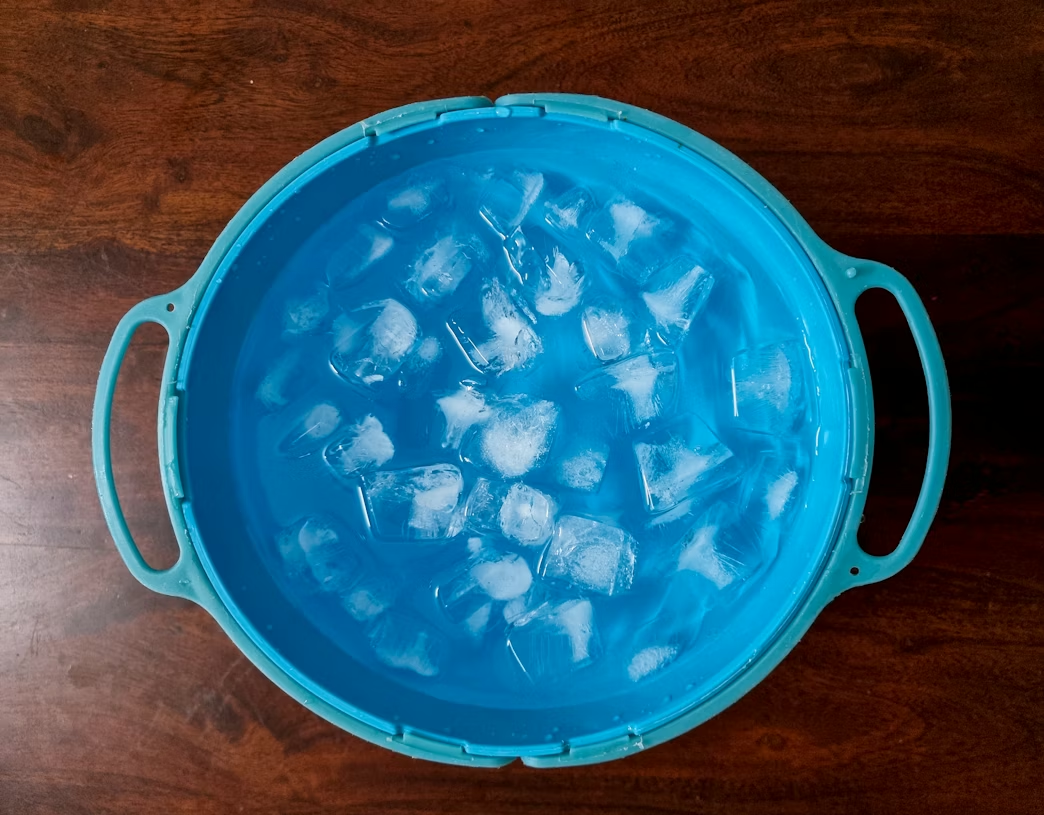
The simplest implementation is cold water face washing, specifically a final rinse with the coldest water available from the tap after cleansing. This takes approximately 30 seconds and produces an immediate visible reduction in redness and puffiness that lasts 15 to 30 minutes in most cases. For more significant effect, submerging the face in a basin of ice water for 30 to 60 seconds produces a stronger vasoconstriction response, though we acknowledge this requires more commitment than most morning routines accommodate.
Ice rolling has become a popular delivery mechanism for cold therapy and we consider it a functional tool for readers who want something more targeted and convenient than basin submersion. The rolling action combines the vasoconstriction benefit of cold with light lymphatic stimulation from the physical pressure, making it a reasonable two-in-one morning tool.
The limitation of cold therapy is that the effect is temporary. Vasoconstriction reverses within 30 to 60 minutes as the tissue returns to its baseline temperature. We consider cold therapy a useful acute intervention rather than a foundational debloating strategy, and most valuable as a finishing step in a morning routine after the dietary and sleep foundations are in place.
What we recommend:
- Cold water final rinse as the minimum daily implementation: achievable in any context and produces immediate visible improvement
- Ice roller stored in the fridge overnight for a more targeted and sustained cold exposure option
- Ice basin submersion for maximum effect before high-stakes contexts
- Combine cold therapy as the final step after lymphatic drainage and gua sha for compounded immediate effect
Our verdict: A highly effective acute intervention that delivers immediate visible results. We recommend cold therapy as the finishing step in any morning debloating routine, applied after the manual techniques for the most impactful combination.
The LooksLab Verdict
After extensive testing across our team and community, our overall conclusion on facial debloating is that the available methods are more effective and faster-acting than most men expect before they try them systematically. The difference between an unoptimised baseline and a fully implemented debloating protocol is among the most visible appearance improvements available without any cosmetic procedures.
The protocol we recommend to most readers builds from the dietary foundations outward. Addressing sodium, hydration, alcohol, and potassium produces the most significant and sustained baseline improvement. Sleep position optimisation adds an immediate and free layer of daily benefit. The manual techniques including lymphatic drainage, gua sha, and cold therapy provide both immediate visible improvement and cumulative long-term benefit through improved lymphatic function and circulation.
The compound effect of implementing all tiers simultaneously is greater than the sum of its parts. In our experience, men who commit to the full protocol for two weeks consistently describe a visible and sustained improvement in facial definition that produces a meaningful shift in how they perceive their own attractiveness and how others respond to them.
Frequently Asked Questions
How long does it take to reduce facial puffiness? The fastest interventions, cold therapy and lymphatic drainage, produce visible results within minutes. Sodium and alcohol reduction produce significant improvement within 24 to 72 hours. Hydration optimisation and potassium intake produce their full effect over two to five days. Anti-inflammatory dietary changes take one to two weeks for meaningful visible improvement.
Does drinking more water reduce facial puffiness? Counterintuitively, yes. Dehydration triggers retention mechanisms that cause the body to hold onto existing fluid. Consistent hydration signals that fluid is abundant and retention is unnecessary, reducing facial puffiness over two to three days of sustained optimal intake.
Does gua sha actually work for puffiness? In our experience, yes, when used with correct technique. The light directional strokes stimulate lymphatic drainage and increase local circulation, producing a visible reduction in puffiness and improvement in facial definition within a single session. Consistent daily practice produces cumulative improvement beyond the immediate effect.
What is the fastest way to reduce morning puffiness? The combination of cold water face washing, lymphatic drainage massage, and gua sha performed immediately after waking produces the fastest visible improvement. If dietary foundations including sodium management and hydration are in place, this morning routine produces results within five to ten minutes that are consistently striking.
Is facial puffiness permanent? For the vast majority of men, facial puffiness is not a permanent structural feature but a physiological state driven by dietary, hydration, sleep, and lifestyle variables. The methods in this guide address every major driver and produce consistent, reliable improvement for readers who implement them systematically.